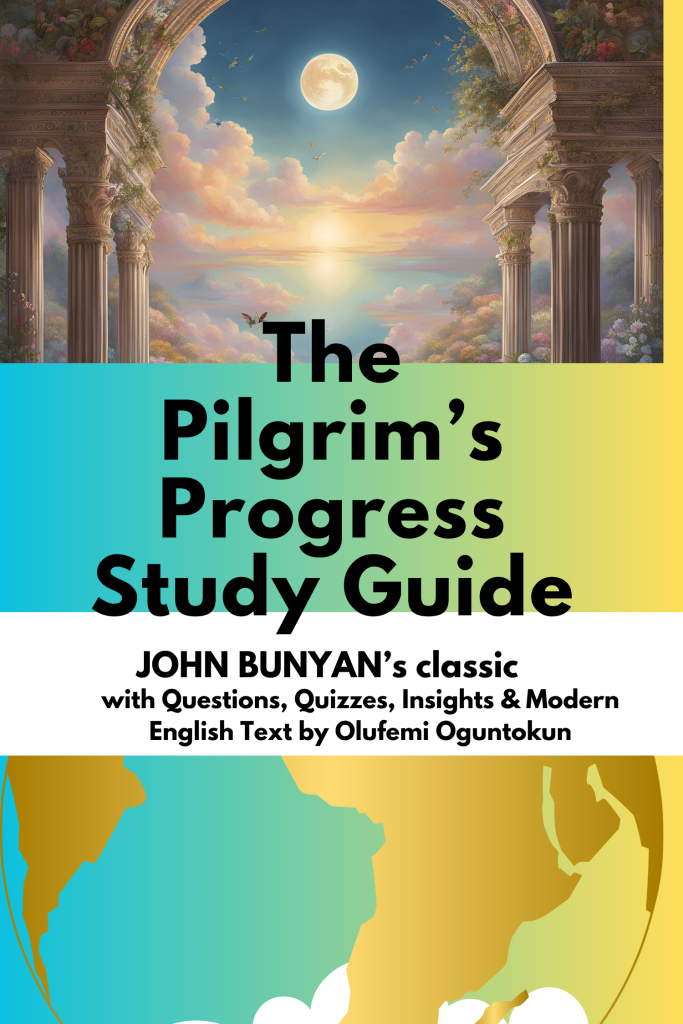
The GospelBells Radio Readers’ Club Class of 2026 held its first reading session on Sunday, March 8, 2026, launching what promises to be another thoughtful and spiritually enriching journey through John Bunyan’s classic Christian allegory, The Pilgrim’s Progress.
The session, which ran from 7:30 p.m. to 9:00 p.m., brought together about 23 participants on Zoom, while many more listeners joined through the live stream at GospelBellsRadio.com. The gathering marked the third annual reading of the book on GospelBells Radio, following earlier successful readings in 2023 and 2024.
A recording of the class is embedded below, allowing those who missed the session to listen in and enabling participants to revisit the discussion and insights shared during the meeting.
(Read or listen to other sessions from the 2026 Readers’ Club)
Opening the Journey
The session was facilitated by Olufemi, who introduced the 2026 reading and explained the significance of Bunyan’s work. Written in 1678 while Bunyan was imprisoned in England for preaching without a license, The Pilgrim’s Progress remains one of the most influential works of Christian literature ever written.
Participants were reminded of the famous remark attributed to Charles Spurgeon, who reportedly said that next to the Bible, the book he would most readily read every year was The Pilgrim’s Progress.
Olufemi explained that the book is an allegory of the Christian life, telling the story of a pilgrim’s journey from the City of Destruction to the Celestial City—a powerful metaphor for the believer’s spiritual journey toward salvation and eternal life.
The Readers’ Club follows a structured study format each week. Each session typically includes:
- A study hymn
- Cornerstone Bible verses
- A chapter overview
- Text reading
- Quiz questions
- Discussion questions and reflections
Participants were also reminded that the class will progress one chapter per week, requiring patience and commitment but promising deep spiritual rewards.
Hymn and Cornerstone Scriptures
True to the Readers’ Club tradition, the class began with the singing of the study hymn “Come We That Love the Lord”(also known as “We’re Marching to Zion”).
Participants then chorus-read three cornerstone Bible passages that frame the pilgrim theme of the book:
- Matthew 7:13–14 — describing the narrow gate and the difficult road that leads to life
- 1 Peter 2:11 — reminding believers that they are “strangers and pilgrims” in the world
- Hebrews 11:13 — affirming that the heroes of faith lived as pilgrims on earth
These passages provided the biblical foundation for understanding the story that would unfold in Bunyan’s allegory.
Chapter One: “The Man and His Burden”
The class then turned to Chapter 1, where readers encounter the unnamed protagonist—later known as Christian.
Participants Funmilayo and Mark shared the reading. The narrative introduces a striking scene: a man clothed in rags, holding a book, and carrying a heavy burden on his back.
As he reads the book, he becomes deeply distressed and repeatedly cries out:
“What shall I do?”
The text also describes how his family, alarmed by his behavior, assumes that he has suffered some form of mental breakdown. Unable to explain the inner turmoil he is experiencing, the man begins to withdraw into solitary walks in the fields, where he spends time reading, praying, and reflecting.
It is in this state that he eventually encounters the character Evangelist, who directs him toward the narrow gate and the shining light, setting him on the path toward salvation.
Testing Understanding: The Chapter Quiz
To reinforce engagement with the text, Olufemi conducted a short quiz session.
Participants demonstrated close attention to the reading:
- Alex identified that the man was clothed in rags and holding a book.
- Another participant noted that he had a burden on his back.
- Ogaga (Ayodeji) observed that his back was turned to his home.
- Wendy pointed out that his family believed he had lost his mind.
- Yemisi recalled that he found solace in walking, reading, and praying in solitude.
- Ayodeji added that Evangelist found him crying out in the fields.
The quiz confirmed that participants were following the story closely and grasping the details of Bunyan’s narrative.
Unpacking Bunyan’s Symbolism
One of the highlights of the evening was the discussion of the symbolic elements in the opening chapter.
The Meaning of the Rags
Participants reflected on the symbolism of the rags worn by the protagonist.
Funmilayo suggested that the rags represent sin, an interpretation affirmed by Olufemi, who referenced Zechariah 3:2–4, where the prophet Joshua stands before God in filthy garments representing iniquity.
The consensus was clear: the rags depict the man’s sinful condition before God.
The Burden on His Back
The discussion then turned to the heavy burden the man carries.
Participant BunmiNiceBunmi explained that the burden represents the guilt and weight of sin on the conscience.
Olufemi emphasized an important distinction:
a person may be a sinner without feeling guilty, but the man in the story bears both the sin (the rags) and the conviction of sin (the burden).
It is this burden that drives him to cry out: “What shall I do?”
The Book and the Turning Away
Participants also identified the book in the man’s hand as representing the Bible.
Ogaga made this connection, while Alex observed that the man’s posture—turning his back to his home—symbolizes an active search for truth.
Olufemi linked this idea to Jeremiah 29:13, which promises:
“You will seek Me and find Me when you seek Me with all your heart.”
Turning away from his home therefore symbolizes a decisive break from distractions and a wholehearted search for God.
The Fields and the Evangelist
The discussion continued with the symbolism of the fields and the character Evangelist.
Olufemi suggested that the fields represent the world, where seekers wander in search of truth.
Funmilayo pointed out that Evangelist represents those who share the gospel, a point further developed with reference to 2 Corinthians 5:18–19, which describes believers as having the ministry of reconciliation.
In this sense, Evangelist represents any Christian who has been called to help guide others toward Christ.
The Continuing Relevance of Bunyan’s Story
An interesting conversation emerged when Alex raised questions about how a book written in 1678 translates into modern life.
He observed that in Bunyan’s time, a troubled person might walk into the fields to reflect, while today spiritual distress may appear in very different ways.
Olufemi agreed that the cultural context may have changed, but emphasized that the book’s power lies in its biblical imagery, which transcends generations.
Participant Mark added that the pattern of families misunderstanding spiritual awakening still occurs today, citing the experience of Muslims who convert to Christianity and are sometimes accused by relatives of losing their minds.
When the Word Convicts the Heart
Another powerful discussion focused on the man’s dramatic reaction to the book he was reading.
Some participants wondered whether such responses still happen today.
Several biblical examples were cited:
- Acts 2:37, where listeners at Pentecost cried out, “What shall we do?”
- The Ethiopian eunuch who immediately sought baptism after understanding the Scriptures
- The repentance of Israel during Ezra’s reading of the Law in Nehemiah 8
Yemisi read Hebrews 4:12, reminding the group that:
“The word of God is living and active… sharper than any two-edged sword.”
Participants agreed that when the Holy Spirit illuminates Scripture, the Word still produces profound conviction.
Why Spiritual Convictions Are Hard to Explain
Another theme explored was the difficulty the man faced in explaining his distress to his family.
Participants reflected that spiritual experiences can be difficult to communicate, particularly to those who do not share the same spiritual understanding.
Mark referenced 1 Corinthians 2:14, noting that spiritual truths must be spiritually discerned.
Others shared personal experiences:
- Funmilayo recalled that even her churchgoing parents initially believed she was unstable after her conversion.
- O’funmbi noted how people who knew someone before conversion often struggle to understand the change.
- Sade added that even believers at different levels of spiritual maturity may misunderstand each other.
The Right Response to Misunderstanding
The final discussion of the evening focused on how the man responded to his family’s dismissal.
Rather than arguing with them, he withdrew to pray and pitied their blindness.
Participants reflected that the proper Christian response to misunderstanding is compassion combined with persistent prayer.
While some emphasized the importance of prayer above all else, Olufemi explained that the man’s pity arose from knowing that the City of Destruction was doomed, making his family’s unbelief tragic.
The discussion recalled the well-known hymn “Rescue the Perishing,” which urges believers to plead gently with those in spiritual danger.
Looking Ahead to the Next Session
As the session concluded, Olufemi thanked participants—including Alex, Emoghena, Sade, and others—for their thoughtful contributions.
Interestingly, the discussion proved so rich that not all the discussion questions for Chapter 1 were completed. The next class will therefore resume with Question Five of Chapter 1 before moving further into the book.
The meeting closed with a prayer offered by Kola, who asked God to grant the group wisdom, insight, and freedom from distractions as they continue uncovering the deeper meaning of Bunyan’s allegory.
Join the Journey
The Readers’ Club will continue its weekly reading of The Pilgrim’s Progress next Sunday by God’s grace. Even those who were unable to attend the first session are warmly invited to join the study.
Participants are encouraged to commit to the full journey through this timeless Christian classic.
🎧 Listen to the recording of the March 8 session in the player embedded below.
Those who would like to join the GospelBells Radio Readers’ Club or make enquiries can reach out through:
📧 Email: gospelbellsradio@gmail.com
📱 WhatsApp: 08094711629
Whether you are revisiting Bunyan’s masterpiece or encountering it for the first time, the Readers’ Club offers a thoughtful and engaging way to explore one of the most enduring allegories of the Christian faith.
(Read or listen to other sessions from the 2026 Readers’ Club)
Recent Posts from GospelBells Radio …


Join Our WhatsApp Blog
Stay connected with GospelBells Radio! Subscribe to our WhatsApp Blog for daily inspiration, updates, and faith-filled content. Turn on notifications to never miss a post.
Subscribe Now📢 Stay connected with GospelBells Radio!
Follow us on X