The Watchful Porter: Readers’ Club Discovers What It Really Takes to Welcome a Weary Pilgrim Home
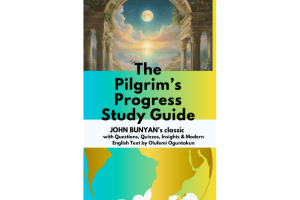
Every institution reveals its true character not in its mission statement, but in how it treats the person standing hesitantly at its door. On Sunday, August 2, 2026, the GospelBells Radio Readers’ Club arrived at exactly such a threshold in The Pilgrim’s Progress, following Christian as he stood trembling before two lions guarding a narrow passage—and met, on the other side of that fear, a gatekeeper whose character the class spent the entire evening unpacking, verse by verse, virtue by virtue.
The session opened with a brief but important look back. The previous week’s study—Christian’s painful discovery that he had lost his scroll, and the long, tearful walk back to recover it—was recapped with a clarifying distinction the class was eager to preserve: God’s forgiveness for that lapse was never in question, but the relationship a believer enjoys with Christ can still be genuinely strained by sin, even when full pardon is guaranteed. Christian did not merely lose an object; he lost, temporarily, the joy of his salvation, and the road that should have taken him a day instead cost him three. That distinction—between forgiveness that is certain and communion that must be actively repaired—set the emotional register for everything that followed.
From there, the class briefly revisited why Christian had not turned back at the sight of the lions, as Timorous and Mistrust had done before him. The answer, they agreed, was not superior courage on Christian’s part. Left to himself, he too would very likely have fled. What made the difference was a voice—the porter’s voice—calling out from the lodge just as Christian hesitated. That voice, and the man behind it, became the evening’s central subject.
What the Hill Represented, Revisited
Before turning to the new material, the moderator asked the class to restate, in their own words, what the Hill Difficulty had represented. The answers that came back were sharpened and specific, going well beyond a generic notion of “life’s challenges.” The hill, the class agreed, pictures the particular and often costly transition every convert must make from an old life to a new one in Christ—the very thing Paul describes in 2 Corinthians 5:17, that in Christ a person becomes a new creation, the old things having passed away.
What followed was a wide-ranging and remarkably honest inventory of what that transition actually costs in practice. Strained relationships with family members who want nothing to do with a believer’s new direction. The daily, grinding work of putting off anger, malice, and the desire for revenge. The pull of “the lust of the eyes”—the world’s glittering alternatives competing for a believer’s attention and affection. The discomfort of a mind trained to demand proof now being asked to walk by faith rather than sight. The surrender of self-will to the will of Christ. And, not least, the lingering weight of past mistakes, regrets, and griefs that a new creation must learn to release rather than carry forward. One contributor tied this list directly back to the lions themselves: Christian’s own instinct, on first seeing them, was to trust his eyes over the promise he had already received—proof, the class noted, that even a matured pilgrim is not finished fighting the old habit of walking by sight.
Arrival at a Grand Palace
With that foundation freshly laid, the class turned to the reading itself: Christian, still mourning his earlier mistake, lifts his eyes and sees a magnificent building named Beautiful standing beside the highway. Between him and it lies a narrow passage, barely a furlong from the porter’s lodge—and in that passage, two lions.
The class moved quickly and confidently toward identifying the Palace as the church, the gathered body of believers. But what followed was a longer, more careful conversation about what kind of church this really is, prompted by a simple observation from the text: the passage leading to it is narrow. Members worked through the practical implications of a narrow passage almost as if walking it themselves—the need to move carefully, to take a particular posture, to travel one at a time rather than in a crowd, and, tellingly, the impossibility of carrying excess baggage through it. A narrow way, several agreed, forces a traveler to drop whatever cannot fit, echoing the writer of Hebrews’ charge to “lay aside every weight” in pursuit of the race set before us. It was also observed that a narrow passage is typically dim, meaning Christian could not see the lions clearly enough to know they were chained—an image the class read as a picture of walking by faith into uncertainty that only later reveals itself as safe.
How Wide Should the Gate Be?
This detail opened into the evening’s most animated exchange: how wide, or how narrow, should the door to the church actually be? The class laid out two familiar positions side by side. One view holds that the door should be thrown open as widely as possible—come as you are, no preconditions, let everyone in, and trust that transformation will happen once people are inside, much as a fishing net gathers both good and bad fish before any sorting occurs. The other insists that the church, properly understood, carries real minimums: a personal decision to follow Christ, a willingness to lay aside the sin that so easily entangles, a genuine intention to be changed rather than merely accommodated.
The class ultimately arrived at a resolution that honored both instincts without collapsing the distinction between them. The visible, physical gathering of a congregation—the crusade ground, the Sunday service, the open doors of a building—should indeed be wide, welcoming anyone regardless of where they currently stand, because that is where the gospel is first proclaimed to those who have not yet believed. But the true, spiritual body of Christ, the class insisted, remains by definition an exclusive fellowship, entered only by those who have made the same personal, narrow-passage decision Christian made: dropping every weight, denying self, and walking in. One participant offered a memorable formulation of this balance—”you can come as you are, but you cannot remain as you are”—a phrase the group returned to more than once as capturing exactly what a healthy, honest invitation to faith should sound like, in contrast to gospel presentations that promise ease, prosperity, or painless belonging without ever mentioning the cost Christ Himself named.
A telling piece of historical context deepened this discussion considerably. The class was reminded that John Bunyan wrote this very book from a prison cell, jailed for preaching without a license from the Church of England, the only church recognized by the state in his day. Those who wished to worship outside that sanctioned body did so at genuine risk of arrest and imprisonment—precisely the fate that befell Bunyan himself. Read against that backdrop, the two lions guarding the passage to the Palace Beautiful took on a sharper historical edge: for Bunyan’s original readers, they likely represented the very real danger of state persecution that stood between a believer and open fellowship with a nonconformist church. Even where such literal danger has receded for many readers today, the class suggested the lions still picture whatever social, professional, or relational cost a person may face for openly declaring allegiance to Christ.
Meeting the Man Called Watchful
The remainder of the evening belonged almost entirely to the porter—named, fittingly, Watchful—and the class approached him less as a minor character than as a model to be studied and, ideally, imitated.
The starting point was a single word in the text: the porter noticed. He had never met Christian before. He owed him nothing. Yet standing at his post, he observed a stranger hesitating on the verge of turning back, and he acted. The class connected this immediately to God’s charge to Ezekiel as a watchman over Israel—warned that if he saw danger approaching and failed to sound the alarm, the resulting harm would be required at his own hand. Watchful, the group agreed, embodies that same sober responsibility, transposed into an act of encouragement rather than warning.
From there the class built out a fuller character study, virtue by virtue. Vigilance, first and most obviously—he was paying attention when it would have been easy not to be. This observation prompted an extended and pointed aside about the modern epidemic of distraction: security guards scrolling on their phones, headphones blocking out the very warning sounds they exist to hear, an entire culture increasingly unable to notice anyone but itself. Watchful’s usefulness, the class stressed, depended entirely on his refusal to disappear into his own private world while people in genuine need passed within arm’s reach.
Beyond vigilance came empathy and discernment—the capacity not merely to see a struggling person but to correctly read what was happening in his heart. The class drew a comparison to Barnabas, “son of encouragement,” who sought out and strengthened Paul at a fragile early stage of his ministry when others were still wary of him. Both figures, the group observed, required something beyond good intentions: a working knowledge born of their own experience. Watchful could reassure Christian about the lions precisely because he already knew them to be chained. His comfort was not generic optimism; it was informed, earned confidence, freely offered to someone who had none of his own yet.
The class also lingered over Watchful’s humility and evident lack of self-interest. He did not posture as a superior, seasoned pilgrim lecturing an inexperienced one—a temptation the group readily admitted many long-time believers fall into. Nor did he treat the Palace as his own private possession to be guarded jealously against newcomers. Asked whether Christian might lodge there for the night, his answer deflected any sense of ownership entirely: the house belonged to the Lord of the Hill, built expressly as a place of rest and safety for travelers. He was not the proprietor turning strangers away from his own establishment; he was a steward glad to see the house he served put to its intended use. One contributor summarized this posture simply as an absence of selfishness—a readiness to see others welcomed in rather than a desire to protect a place already secured for himself, likened to the psalmist’s invitation, “taste and see that the Lord is good.”
Underneath all of this, the class agreed, ran a single unifying thread: love. Vigilance without love curdles into suspicion; discernment without love becomes mere diagnosis. It was love, several participants insisted, that moved Watchful to do far more than his job description required. A porter’s task, strictly speaking, is simply to open the gate and confirm a visitor poses no danger to the house. Watchful did that—but he also functioned as evangelist, encourager, and counselor in the same brief exchange, calling out precisely the right question at precisely the right moment: “Is thy strength so small?” The class heard in that line a deliberate echo of Christ’s own words to His frightened disciples in the storm—”Why are ye so fearful? How is it that ye have no faith?”—suggesting that Watchful’s rescue of Christian was itself a small, human reflection of a much larger, divine pattern of intervention running throughout the whole story: Help pulling Christian from the Slough of Despond, Evangelist redirecting him from the road to Legality, an unnamed messenger waking him from his dangerous sleep on the hill, and now Watchful holding him back from needless retreat.
Staying in the Middle of the Road
Watchful’s specific instruction—”keep in the midst of the path”—prompted the class to circle back once more to Goodwill’s counsel at the very beginning of the pilgrimage: that the true way is always the one that is “straight and narrow,” built and walked by the patriarchs, the prophets, Christ, and His apostles. To stray to the left or right of that path, the class suggested, is not necessarily to abandon it outright but to begin quietly testing its edges—looking for firmer or more comfortable ground just outside the boundary Scripture has actually set. The remedy, restated plainly, is the same simple test offered throughout this series: is this what Christ would have done? Is this what the commended patriarchs, prophets, and apostles would recognize as their own road? Anything that fails that test, however well-intentioned, is no longer the straight and narrow way, however many people may be walking it.
A Steward, Not a Gatekeeper
As the evening drew to its close, the class assembled its full portrait of Watchful into a single composite worth carrying away: a man who was vigilant, empathetic, discerning, experienced, humble, generous, unselfish, and above all animated by love for both the house he served and the strangers arriving at its gate. One contributor, echoing a phrase offered earlier in the chat, called him simply “a faithful steward”—someone who understood that his authority at the gate existed not to exclude, but to protect and to welcome rightly. The closing prayer of the evening asked directly for this same grace: that the class themselves would learn to be people who “pull people in rather than push them out,” modeling, in their own circles, the same watchful, loving readiness that met Christian exactly when his strength was smallest.
Closing Reflections
The evening’s abiding image was not, in the end, the lions—fearsome as they were—but the man who stood just beyond them, paying attention, ready to speak a timely word to a stranger he had never met. The class left with a clear and searching question for their own week: who around them might, at this very moment, be standing at the edge of turning back, simply waiting for someone watchful enough to notice.
Looking Ahead
The Readers’ Club will continue next Sunday, God willing, as Christian is welcomed further into the Palace Beautiful and meets the household of faith gathered within—the next stage of instruction and fellowship awaiting every pilgrim who makes it safely past the lions.
🎧 The full recording of the August 2, 2026 session is available for anyone who wishes to hear this rich character study in full, alongside the recordings of the two preceding weeks now published at last.
Those who would like to join the GospelBells Radio Readers’ Club or make enquiries are warmly invited to get in touch:
📧 Email: gospelbellsradio@gmail.com 📱 WhatsApp: 08094711629
Somewhere between the lions and the gate, every pilgrim needs a Watchful. The question this week’s study leaves each of us with is simple: are we willing to be one?