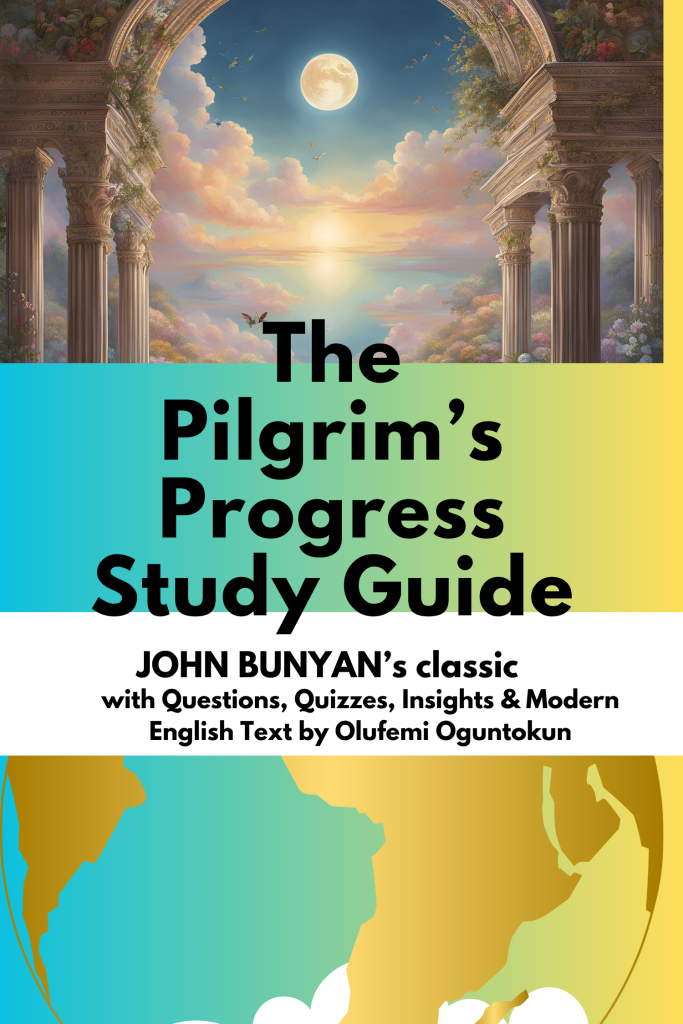
The GospelBells Radio Readers’ Club Class of 2026 convened its fifth session on Sunday, April 19, 2026, continuing its rich and layered study of The Pilgrim’s Progress by John Bunyan. This session, focused on “Mr. Worldly Wiseman (III),” marked a decisive turning point in the class discussions, as participants carefully contrasted two competing prescriptions for salvation—one rooted in faith, the other in human effort.
Two Prescriptions: Christ vs. Morality
The session began with a powerful comparison between:
- Evangelist’s counsel: Go to the narrow gate (Jesus Christ)
- Mr. Worldly Wiseman’s counsel: Go to the village of Morality and meet Mr. Legality
Participants were reminded that Christian’s core problem remained unchanged:
He was burdened by the guilt of sin and desperately sought relief.
Evangelist’s solution pointed him to Christ, while Mr. Worldly Wiseman offered an alternative:
Become morally upright and follow rules—and your guilt will disappear.
This contrast formed the backbone of the evening’s discussion.
Key Lesson 1: The Way of Faith vs. The Way of Sight
One of the most striking insights was the contrast between visibility and faith.
- The narrow gate could not easily be seen—it required faith
- The village of Morality was visible, familiar, and easy to locate—it appealed to human reasoning
Participants observed:
The path of God often requires faith in what is not immediately visible, while false alternatives appeal to what is easy, familiar, and logical.
This echoed the biblical principle that believers must walk by faith, not by sight.
Key Lesson 2: The Appeal of “Easy Solutions”
Mr. Worldly Wiseman’s prescription stood out for its simplicity:
- The destination was near and familiar
- The solution was immediate and practical
- The lifestyle promised comfort, respectability, and ease
This led to a critical takeaway:
False solutions often appeal because they are easier, quicker, and more comfortable than God’s way.
In contrast, the way to Christ was described as narrow and difficult—yet it is the only path that leads to life.
Key Lesson 3: Morality and Legality Cannot Save
A central focus of the discussion was the symbolism of:
- Morality — outward good behaviour
- Legality — righteousness based on keeping laws
Participants concluded:
Morality (good behaviour) and legality (law-keeping) cannot remove the guilt of sin.
While such lifestyles may produce:
- A good reputation
- A clear conscience
- Social approval
They do not address the root problem—the sinful condition of the heart.
Key Lesson 4: The Danger of False Assurance
The class examined how people who live “morally upright” lives may become:
Unconscious of their true spiritual condition
Real-life examples were shared of individuals who:
- Do good to others
- Live disciplined, upright lives
- Yet reject Christ
Such individuals often believe they are safe because of their conduct.
The class emphasized:
A clear conscience is not the same as being justified before God.
Key Lesson 5: God’s Standard—Not Ours
Perhaps the most profound lesson of the evening was this:
Salvation is determined by God’s standard—not human standards.
Participants reflected deeply on the holiness of God:
- God is not merely holy—but “holy, holy, holy”
- Even our best righteousness is insufficient before Him
This led to a sobering conclusion:
No amount of moral effort can meet the standard of God’s holiness.
The issue is not whether one appears good before people—but whether one is acceptable before God.
Key Lesson 6: The Heart Matters More Than Appearance
The discussion also exposed the role of “Civility”—a fallback option when true morality fails.
Civility represents:
- Outward appearances
- Respectability without true righteousness
- Living in a way that looks good to others
Participants noted:
It is possible to appear morally upright while remaining unchanged inwardly.
This reinforced a critical truth:
God is concerned with the condition of the heart, not merely outward conduct.
Key Lesson 7: The Limitation of Human Effort
Drawing from Scripture and practical illustrations, the class emphasized:
Human effort alone cannot produce true righteousness.
Even those who seem to keep moral laws:
- Do not fully meet God’s standard
- Cannot transform their inner nature
- Cannot remove the guilt of sin
This led to a powerful analogy:
Trying to meet God’s standard through morality is like using a tool that lacks the capacity for the task—it simply cannot succeed.
Key Lesson 8: Only Christ Can Remove the Burden
The session returned to the central truth of the gospel:
Only Jesus Christ—the “narrow gate”—can truly remove the burden of sin.
Unlike morality, Christ:
- Deals with both guilt and nature
- Meets God’s standard on behalf of the believer
- Provides true and lasting relief
Participants were reminded that access to God is not earned—but granted through Christ alone.
Final Reflection
The fifth session delivered one of the clearest warnings in the study so far:
- Not every solution to guilt is from God
- Moral living is not the same as salvation
- Ease and familiarity can mask spiritual danger
Above all, the class affirmed:
The only safe path is the one that leads to Christ—no matter how narrow or difficult it appears.
Looking Ahead
The discussion ended with anticipation as participants look forward to the next session, where Evangelist will reappear to confront Christian’s deviation and expose the full danger of Mr. Worldly Wiseman’s counsel.
🎧 Listen to the full recording of the April 19 session in the embedded player below.
The journey continues—and with it, deeper insights into the pilgrim’s path.
(Read or listen to other sessions from the 2026 Readers’ Club)
Recent Posts from GospelBells Radio …



Join Our WhatsApp Blog
Stay connected with GospelBells Radio! Subscribe to our WhatsApp Blog for daily inspiration, updates, and faith-filled content. Turn on notifications to never miss a post.
Subscribe Now📢 Stay connected with GospelBells Radio!
Follow us on X