When the Path Goes Dark: Readers’ Club Learns to Pray Without Seeing and to Look Back at Daybreak
By a Correspondent | GospelBellsRadio.com
There is a kind of darkness that cannot be fought with a sword. On Sunday, October 18, 2026, the GospelBells Radio Readers’ Club returned to the Valley of the Shadow of Death for a second evening and spent it learning what Christian learned there: that some seasons of the Christian life offer no visible enemy to confront, no clear path to follow, and no felt sense of God’s nearness, and that the pilgrim who walks through them does so on a narrow road, with a ditch on one side and a swamp on the other, armed with a single weapon he had barely needed before. By the time the class reached daybreak with Christian, it had unpacked the meaning of the narrow path, the darkness, the weapon of all-prayer, the blasphemous whispers that Christian mistook for his own thoughts, the voice of a stranger reciting Psalm 23, and the strange, wise act of looking back once the light comes.
Opening in Prayer
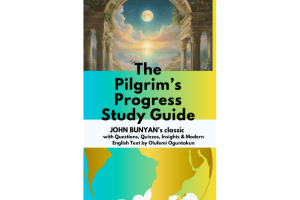
The evening began, as usual, with the class’s marching hymn, and the opening prayer was offered by one of the participants, who thanked God for the gift of life and for the one who had written the book and the one who coordinates the study, and asked for deep understanding, so that lives would witness to others, and that the time spent in study would prove not to have been wasted. The class then read the three cornerstone verses together: Matthew 7:13–14 on the narrow gate, 1 Peter 2:11 on abstaining from fleshly lusts as strangers and pilgrims, and Hebrews 11:13 on those who died in faith. The moderator renewed the prayer that the class would see itself as strangers and pilgrims in this world rather than as citizens of it.
Where We Left Christian
Asked where Christian had been left the previous week, a participant answered that he was in the Valley of the Shadow of Death. The moderator took the class back one step further. The Valley of Humiliation, he said, was the place where weakness is laid bare, where a Christian sees his own frailty, and where Satan brings his temptations. What does a believer need there above all? The class answered: the word of God, the sword, which Christian had used to wound Apollyon, though another participant reminded the class that he had left the Palace Beautiful wearing the full armor of God. The moderator agreed, and added a nuance that would matter for the rest of the evening: a Christian always needs the whole armor, but in a given season one piece becomes the chief instrument. In the Valley of Humiliation, with a tempter to answer, it was the sword.
The Narrow Path
The moderator then walked the class back through what they had read the week before. The first thing Christian found in the new valley was that the path was extremely narrow. What does that mean symbolically? One participant pointed to the cornerstone verse the class had just read: narrow is the way that leads to life, and few find it. Another contribution explained that the narrowness signifies that the way is not easy to navigate. The moderator pressed with a challenge: what in last week’s reading showed that the road was so narrow that some would refuse it? The answer was the two men Christian met at the entrance, who had turned back, while Christian chose to continue because it was the only road to the Celestial City.
The moderator offered a further layer of meaning. A road so narrow and dangerous that it must be walked carefully is a road that must be walked by faith. It makes no common-sense sense to walk a dangerous road, he observed, and anyone who knows the terrain would advise avoiding it. It takes faith to walk it, and the faith in question is the conviction that this is the road that leads to the Celestial City and that God has commanded the pilgrim to walk it. He pointed out that Christian struggled, and that there is no shame in that. Many Christian preachers project perfection and strength, he said, which can be a blessing in some respects but does not help those whose faith is weak and who wonder why they are struggling when everyone else seems so strong. He noted that the prophet, speaking the word of God, calls the Jacob that God will help a worm, a weak creature that can be crushed underfoot, and that God does not call His people to impress Him with their strength but to say honestly when they are struggling, because His strength is made perfect in weakness.
A Ditch on Each Side
The moderator reviewed the terrain: the ditch on one side, the swamp on the other, and the path between them so narrow that avoiding one brought Christian close to falling into the other. The ditch, the class agreed, represents heresy, doctrinal error, and carelessness that leads into sin. The swamp represents despair, guilt, doubt, sorrow, and depression, the same kind of mire as the Slough of Despond. A pilgrim in this valley must therefore walk with extreme care, because one careless step in either direction ends in disaster.
Why the Path Was Dark
The class then turned to the detail that, besides all this, the path was so dark that Christian often did not know where to place his foot. What spiritual season does the darkness represent? The class built up an answer through a series of contributions, each adding a layer.
One participant suggested that the darkness represents a season in which a believer cannot readily tell which way to go, perhaps because he must rely on guidance from God’s word or from others, and even the leaders in the faith cannot help. Another said the darkness could mean a period of real sorrow and depression, such as that of someone who has lost a loved one, a loss only the one who bears it can feel, and she added that in such seasons the most others can do is to lift the sufferer up in prayer. A third described a period of confusion about why one is suffering: a person searches his life honestly, finds no sin to account for the trouble, and wonders why he must go through it. The moderator tied this to Job, who examined himself repeatedly, asked God to show him any wrong so that he might repent, and received no answer. A fourth participant connected the darkness to 1 Samuel 3:1, where the word of the Lord was rare in those days and visions were not widespread, and a fifth put it more simply: a time when you cannot hear from God.
The moderator drew the threads together. The darkness, he said, represents a season in which you cannot see God, cannot hear Him, and cannot feel His presence. He asked what makes everything bearable for a Christian, and the class answered: the knowledge that God is with you. The darkness of this valley is the removal of that felt knowledge, which is why the passage is so harrowing. Christian even noticed the mouth of hell beside the path, with flames, smoke, sparks, and terrifying noises that, unlike Apollyon, were not afraid of his sword.
The Weapon Called All-Prayer
In response to this, Christian put away his sword and used another weapon, which Bunyan calls All-prayer. The moderator was careful to explain that putting the sword away did not mean forgetting the word of God, since prayer itself is shaped by Scripture; it meant that a different weapon was now chief. With Apollyon there was an identifiable enemy and a debate to be won with Scripture, as when Jesus answered Satan in the wilderness. Here, there was no visible enemy at all. There was only darkness, the temptation to fall into error, the danger of being overwhelmed by guilt, and terrifying noises. In such a season, the only option is to call for help, and Ephesians 6:18 supplies the weapon: praying always with all prayer and supplication in the Spirit. Christian’s cry was short and simple: O Lord, I beg you, deliver my soul.
One participant observed that in such seasons the believer should seek God rather than try to quote Scripture, because he may not even understand what is happening. He cited Daniel, who when the king’s decree threatened the lives of the wise men did not have an answer ready but went to God and received wisdom, and David at Ziklag, who found his people taken away, wept until he could weep no more, and then consulted God about whether to pursue. The moderator added a long list of those who prayed in extremity: Hezekiah when he was sick unto death and when he received Sennacherib’s insulting letter, Daniel before the king, and Hannah, whose lips moved but whose voice could not be heard. He noted a clip that circulates of a late archbishop saying that no one has ever said to God, help me, and been left unhelped, and he told the class that the beauty of prayer lies not in its length or polish but in its sincerity and in the name in which it is offered. Some prayers, he said, are microwave prayers: Lord, help me; Lord, make a way. At times the trouble is so great that coherent prayer is impossible, but All-prayer remains available.
He also reminded the class that the valley stretched on for miles, and that in such a valley, prayers can become long-standing requests, repeated daily with no visible change. Christian himself, he noted, considered going back at that point, because he had been praying for miles with no apparent change.
How Christian Talked Himself Out of Turning Back
The class then examined the reasoning with which Christian resisted the urge to retreat. A participant read the highlighted passage and identified the steps. First, he thought he might be halfway through the valley by now, which the moderator called a habit of hope worth cultivating, since one never knows how soon the light will come. Second, he remembered the dangers he had already overcome, and a participant added that he realized turning back was not an option. The moderator quoted the hymn line, through many dangers, toils, and snares, I have already come, and urged the class never to let the devil make them dwell only on the prayers that seem unanswered while forgetting the ones God has answered. Third, he recognized that turning back might be riskier than going forward, since he would still have to navigate the ditch and the swamp and might meet Apollyon again. So he pressed on, and when the demons were almost upon him, he shouted at the top of his voice, I will walk in the strength of the Lord God, and they retreated.
Blasphemies That Were Not His Own
Then came what Bunyan marks as a point he does not want to overlook: Christian was so confused that he did not recognize his own voice, and a wicked spirit crept up behind him at the mouth of the pit and whispered blasphemies into his ear, which Christian took for his own thoughts. This troubled him more than anything he had yet faced, since he feared he was cursing the One he loved most. The moderator asked the class whether anyone could relate to blasphemous thoughts crossing a Christian’s mind and leaving him horrified at himself. He explained that this is a documented pattern of spiritual warfare: demons and the devil whisper into the minds of believers, as when Job’s wife told him to curse God and die, and in extreme cases such whispers push people toward suicide. This, he said, is why believers should not merely tell a person in deep trouble that they will keep them in prayer but should actually pray for them.
One participant drew the lesson that this passage teaches us that we cannot rely on our own intelligence or cleverness to navigate this life. Another observed that there is a thin line between one’s own thoughts and what one is hearing, and that if the two cannot be distinguished, depression follows. It is liberating, she said, to realize that such thoughts are not one’s own but come from Satan, and that realization makes it possible to fight back instead of sinking into condemnation. The moderator agreed and added that the devil’s strategy is precisely to make a believer think the thoughts are his own, feel too guilty to pray, and put down the weapon of All-prayer. He told the class that this was the experience of John Bunyan himself, who as recounted in his autobiography stayed away from God for a long time because of blasphemous thoughts, until he understood that they were not his own but a classic tactic of the enemy.
The moderator asked the class when Christian had covered his ears earlier in the story, and a participant answered that it was when he left the City of Destruction, as his family and neighbors called after him; he knew he would be persuaded by their cries if he listened. Believers must learn to cover their ears, he said, to shut out sinful suggestions and blasphemous voices, including those from people who propose unbiblical solutions in times of trouble. One participant offered an important refinement: sometimes you cannot cover your ears, because the voice is inside your own mind, and in such cases the answer is to bring back the word of God and counter the thought with Scripture. The moderator suggested responses: when the voice says God is wicked, answer that the Lord is good and His mercy endures forever; when it says go and end it all, answer that you will not die but live to declare the works of the Lord; when it says there is no way out, recall Daniel in the lions’ den and the three men in the furnace; and when it says anything that offends Christ, say what He said: get behind me, Satan. The moderator observed that all of this involves blocking the avenues, including what we hear and see, through which the enemy gets his material.
A Voice Ahead in the Dark
After traveling for some time in this troubled state, Christian heard a voice ahead of him reciting Psalm 23:4: even though I walk through the valley of the shadow of death, I will fear no evil, for you are with me. The moderator asked the class what lessons they could draw from these five lines. One participant said that it shows that in whatever state we are, God is with us and committed to bringing us through. Another said that it further underlines the importance of fellowship, because Christian’s faith was strengthened by hearing someone else’s, and others connected it to Ecclesiastes 4, that two are better than one, and to iron sharpening iron.
The moderator pointed to 1 Corinthians 10:13, no temptation has seized you except what is common to man, and noted that Bunyan draws three consolations from the voice. First, Christian realized that others who feared God were in the valley with him, which refutes the devil’s whisper that his suffering is a sign that God has rejected him. Second, he understood that God was with them in that dark and frightening place, and so might be with him too, even though he could not sense it. The moderator tied this to Psalm 139, if I make my bed in hell, you are there, and darkness is not dark to you. Third, he hoped to catch up and have company. But when he called out, there was no reply, because the other pilgrim also believed he was alone. Two pilgrims, in the same valley, within earshot, each convinced he was the only one. The class thought of Elijah, who told God that he alone was left, and was told that seven thousand had not bowed the knee. The moderator noted that the knowledge that others suffer is not in itself comforting, but the knowledge that God is with us is.
One participant offered an illustration from history to reinforce the point about learning from others: the Roman Empire is said to have grown by learning shipbuilding from the Carthaginians, and Christians should likewise leverage the resources of the fellowship around them. The moderator added that we should be willing to have our iron sharpened by others and to let ours sharpen theirs. He then read aloud a verse of the hymn, My Hope Is Built on Nothing Less: when darkness veils his lovely face, I rest on his unchanging grace, noting that some versions say darkness seems to hide his face, which is the truer version, because his face is never actually hidden.
Daybreak and the Backward Glance
Soon the day began to break, and Christian said, as Amos 5:8 puts it, that God turns the shadow of death into morning. The moderator prayed that anyone in such a season would see the day break. Then Christian did something unusual in this story: he looked back, not because he wanted to turn around but to see in the light the dangers he had passed through in the dark. What does that mean? One participant said it was to take stock of what God had done. Another cited Lamentations 3:22, the Lord’s mercies are new every morning and because of his great love we are not consumed, and a third cited Psalm 30:5, weeping may endure for a night, but joy comes in the morning. One participant said that unless we look back we cannot properly appreciate what God has done, because looking only forward fixes our attention on what we have yet to achieve, while looking back shows us that God has fought for us and produces thanksgiving. Another added that this was precisely how the children of Israel went astray: they forgot what God had done for them.
The moderator asked the class what else the backward glance reveals. The answer, drawn from the text, is that Christian now saw more clearly the ditch, the swamp, and the narrowness of the path, and the hobgoblins, satyrs, and dragons that he had not seen in the dark, which now kept their distance. In other words, looking back shows us the dangers we did not even know we faced. One participant said that it shows how inadequate our own judgment was; we may think we were being careful, but we had no hand in our deliverance. The moderator offered examples: a medical scare from which one recovers while others in the same situation do not, or a business crisis that destroys others and spares you. Bunyan notes that the second part of the valley, which Christian was about to enter, was even more treacherous, but the sun was now rising, and the Psalmist’s words applied: his lamp shone on my head, and by his light I walked through darkness. Christian then sang a song of praise, ending, still I live, so to Jesus the glory must go.
God Is With Us
Before closing, the moderator invited take-home points. One participant said that no matter what we pass through, someone else has passed through it and overcome, some are still going through it and have not given up, and with God on our side we will overcome too. Another said that sometimes the answer is simply to be still and know that He is God, and the moderator recalled that when Jesus came to the disciples on the water in the storm, He said, it is I; do not be afraid. The class then sang the hymn God Is With Us, whose verses speak of the forefathers of the faith who, though at times they feared and faltered, never ceased to sing that God is with us and Christ our Lord shall reign as king. The moderator observed that this is the whole comfort of the Christian, and that the devil’s aim is to convince believers that God has abandoned them and is far away, but the name Emmanuel means God with us. He cited Isaiah 43:2, when you pass through the waters I will be with you, and Isaiah 49:16, I have engraved you on the palms of my hands.
Closing Reflections
The closing prayer, offered by one of the participants, asked that the class be spared needless suffering, that God would take them by the hand through the storms they would face, that fear would not take their hearts, that they would be still and know that He is God, and that they would remember that weeping may last for a night but joy comes in the morning. Taken together, the evening’s teaching was that the darkest valley is not evidence of a wrong turn, that the pilgrim’s weapon in a season of darkness without an enemy is all-prayer, that the voices of fear and blasphemy are not the believer’s own, that a stranger’s faith can strengthen a lonely traveler, and that when daylight breaks the right response is to look back and give thanks.
Looking Ahead
The Readers’ Club will continue next Sunday, God willing, as Christian moves on from the Valley of the Shadow of Death into the second and more treacherous part of the valley, where the road is filled with snares, traps, and pits, and where the remains of earlier pilgrims lie scattered at the cave of the giants Pope and Pagan.
🎧 The full recording of the October 18, 2026 session is available for anyone who wishes to hear this study of darkness, all-prayer, and the backward glance in full.
Those who would like to join the GospelBells Radio Readers’ Club or make enquiries are warmly invited to get in touch:
📧 Email: gospelbellsradio@gmail.com
📱 WhatsApp: 08094711629
The darkness only veils his face; it never hides it, and the day always breaks.