A new believer’s first morning inside the household of faith is rarely spent behind a desk. Yet that is precisely where Christian found himself on Sunday, September 13, 2026, as the GospelBells Radio Readers’ Club followed him out of the room called Peace and into a guided tour of two rooms in the Palace Beautiful that most churches, the class admitted early on, quietly neglect: the study, where the household’s ancient records were kept, and the armory, where its weapons were stored. Having already tasted fellowship with Christ overnight and fellowship with fellow believers at supper the evening before, Christian now received something no pilgrim, however intimate his walk with the Savior has already become, is ever permitted to skip. He was taught.
The moderator opened by naming, gently but directly, the very temptation this section of the book exists to correct. A believer who has just experienced real intimacy with God, as Christian had the night before when he woke from that upstairs room singing for joy, might reasonably suppose that he has now arrived, that nothing further needs to be shown him. Christian did not make that mistake. When his hosts in the Palace offered to walk him through the rest of the house, he did not wave them off with the claim that he had already met the Savior and needed nothing else. The class held this up as a pattern worth deliberately imitating, invoking Paul’s own confession late in his ministry that he did not count himself to have already apprehended, but pressed on regardless. No depth of fellowship, however real, however sweet, was allowed by the class to become an excuse for a believer to stop being taught. As the moderator put it, that day must never come for any of us — the day we suppose we no longer need to be shown any further treasure from the Word of God.
Fellowship With Christ, Then Fellowship With His People
Before the tour itself began, the class paused over a small but deliberate detail in the text: in the morning, after more conversation, they took Christian to see the rest of the house. The moderator drew attention to the sequence itself. Christian’s window overnight had faced the sunrise, a picture, as the class had established the previous week, of ongoing communion and prayer with Christ Himself. But the very next thing Bunyan records is not solitary contemplation but company — Christian back in conversation with the household before the tour of the study and armory even begins. The lesson drawn out was plain and, several participants agreed, easy to forget in practice: fellowship with Christ in private prayer and fellowship with fellow believers in shared life are not substitutes for one another but companions, each incomplete without the other. A Christian who prizes one and quietly neglects the other, the class agreed, is only half formed.
The Study: Records Too Important to Neglect
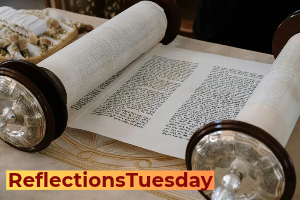
The tour’s first stop was a study containing what the text calls ancient records, and the class spent real and unhurried time drawing out why this, of all places, was chosen as the very first thing a new believer should be shown. A participant leading the reading identified the first item revealed there as the family tree of the Lord of the Hill, tracing his origins all the way back to the Ancient of Days. Another member of the class immediately connected this to the genealogies that frame the Gospels themselves, tracing a direct line from that family tree to Luke’s own record of Christ’s ancestry, which runs unbroken all the way back to, in the Evangelist’s own words, the son of Adam, the son of God. Establishing that lineage, the class insisted, was never a matter of dry record-keeping for its own sake. It authenticates Christ’s identity as truly divine and truly human at once, and it situates the entire plan of redemption as something set in motion long before Bethlehem, traceable all the way back to God’s earliest promise in the garden concerning the seed who would one day crush the serpent’s head.
A further and more searching insight followed from a participant reflecting on Scripture’s own habit of recording genealogies in such exhaustive, sometimes tedious detail. He connected this practice to a very present danger in contemporary religious culture: a marketplace crowded with voices claiming spiritual authority who can point to no traceable origin, no lineage of accountability, no established pattern connecting them to anything that came before. Anyone who simply appears, claiming to speak for God with no discernible history or spiritual parentage, the class agreed, should be met with real caution rather than easy credulity. Christ’s own lineage was never hidden, shortened, or left to inference — it was catalogued in full, deliberately, precept upon precept, generation folded into generation, until, as Paul would later write, the fullness of time had come. No claim to authority today, the class concluded, should be exempt from that same standard of scrutiny.
The moderator then turned the discussion toward a more personal and practical question: why does a Christian already enjoying rich, intimate communion with God still need the specific discipline of Bible study? The class was firm that prayer and Scripture are not competitors vying for a believer’s limited attention, but genuine partners, each incomplete without the other. A believer who prays fervently while neglecting the Word, several participants agreed, risks praying amiss — asking for the wrong things entirely, or approaching God without a true sense of who He is and what He has already promised. Genuine faith, the class insisted, grows specifically through exposure to what God has revealed of Himself, not through spiritual feeling alone. Proverbs chapter four’s charge to give attention to God’s words, to keep them in the midst of one’s heart because they are life to those who find them, was read aloud and held up as the standing corrective to a Christian culture the moderator described candidly: one that gravitates naturally toward prayer, especially prayer for personal needs and immediate concerns, while quietly finding far less appetite for the patient work of studying and understanding the Word that gives prayer its proper shape and direction in the first place.
A Roll Call of Ordinary People
The tour continued to the names of the hundreds the Lord of the Hill had chosen across the centuries to serve Him, and the class built out, almost in real time through open discussion, exactly why a brand-new believer needed to see this particular list so early in his formation. Names were called out freely around the room — Abraham, remembered as the friend of God; Moses; Noah; Isaac; Elijah — and the first and most immediate lesson the class drew from the exercise was one of plain solidarity. These were never spiritual supermen set apart from ordinary human struggle, but men described in Scripture itself, in James’s own memorable phrase concerning Elijah, as being of like passions with everyone in the room. One participant recalled a Bible study from her own church where the group had lingered over the moment Jesus visited Simon Peter’s home and found his mother-in-law ill, struck afresh by how thoroughly domestic and ordinary Peter’s daily concerns remained even as he walked side by side with the Son of God. The point landed with real weight for the class: no believer today can plead exemption from God’s call on the grounds that life feels too cluttered with mundane concern, family obligation, or private worry, since even the towering figures of the faith carried precisely the same distractions and were used mightily regardless.
A second layer followed closely on the first: these ordinary people had been called, deliberately and personally, just as Christian himself had been called at the narrow gate, and just as every believer studying this book tonight is being called still. A third and sharper observation, offered by another participant, noted that Bunyan’s text specifically describes these as detailed records, not flattering highlight reels curated to protect anyone’s reputation. Abraham lied twice about Sarah out of simple fear for his own life. Scripture does not conceal that failure, and the class insisted this detail matters enormously, because it means no believer today can excuse his own stumbling by imagining the saints who went before him were somehow untroubled by the same fear, the same compromise, the same fault. Their faith was proven not by the absence of failure but by what God did with them regardless of it.
What God actually gave to those He called received its own extended and moving reflection: eternal homes that could never be destroyed by time or decay. The class connected this promise directly to the roll call of faith in Hebrews chapter eleven, where the patriarchs are remembered as having confessed themselves strangers and pilgrims on the earth, seeking a country whose builder and maker is God Himself, content to die still believing promises they had only seen and greeted from a distance. That same eternal inheritance, the class agreed, is precisely what Christian now stood to receive simply by having answered the very call those ancient names had once answered before him — a promise, the moderator noted, so central to the whole of Scripture that every other promise God makes is really built around it.
From there the tour named some of the specific, breathtaking feats these ordinary people accomplished by faith alone — conquering kingdoms, working righteousness, stopping the mouths of lions, quenching the violence of fire, being made strong out of weakness, waxing valiant in fight, turning to flight the armies of the aliens. The class was careful not to let this list collapse into mere spectacle or entertainment. One contributor observed with real insight that examples like these exist precisely to prevent the miraculous from being mistaken for fiction — without a preserved record of what faith has actually accomplished in real history, such stories would sound to a skeptical ear like fairy tales rather than sober fact. Another drew a sharper and more personal comparison, noting that whatever difficulty Christian had already survived on the Hill Difficulty paled next to what these witnesses had endured, and yet they overcame completely — proof, he suggested, that the road still ahead of Christian, however hard it might prove, had already been walked successfully by others no different from him in nature or ability. A third insisted that the underlying message being communicated to Christian was neither shame at his own smallness nor mere admiration of others’ greatness, but active, deliberate encouragement: you too, ordinary as you are, may yet do great things — not because you are exceptional, but because the same faithfulness that carried them through will just as surely carry you.
An Armory Vast Enough for Every Pilgrim
Only after being shown what ordinary people had accomplished by faith was Christian finally led into the armory itself, and the class treated this sequencing as entirely deliberate rather than incidental. Having just heard of kingdoms conquered and lions silenced, a new believer might very reasonably despair of ever managing anything remotely comparable in his own life. The armory exists to answer that despair directly and immediately. These feats, the household made clear, were never achieved through unaided human strength or personal heroism, but through equipment that had been supplied — swords, shields, helmets, prayer, and shoes that could never be worn through — present in a quantity the text describes, memorably, as sufficient to furnish an army as vast as the stars of the sky.
The class drew out two distinct and closely related assurances folded into that single striking image. First, sufficiency: whatever spiritual battle any believer might face, the necessary equipment for it already exists, and has already proven fully effective in the hands of those who carried it before. Second, and just as important for a new believer prone to self-doubt, inexhaustibility: no Christian can ever claim that the armory ran dry before their own turn arrived, as though Abraham had somehow used up all the available faith, or Elijah had claimed the very last measure of courage, leaving nothing behind for those who would come after. One participant observed that the supply is deliberately described as vast enough that no believer has any excuse left to plead — not lack of faith, not lack of courage, not lack of grace to pray as one ought, because in that armory, as he put it, there is enough to go around for every single pilgrim who will ever ask.
This observation opened naturally into a shared, unhurried reading of the full armor of God as Paul describes it in Ephesians chapter six — the girdle of truth, the breastplate of righteousness, feet shod with the preparation of the gospel of peace, the shield of faith able to quench every fiery dart of the wicked one, the helmet of salvation, and the sword of the Spirit, which is the word of God, the whole equipped believer then charged to keep praying always, with all perseverance and supplication for all the saints. The class read this passage aloud together, verse by verse, allowing its familiar cadence to settle over the discussion as confirmation of everything the armory in the story had already pictured.
Why the Weapons Were Never the Point
Perhaps the evening’s single most striking turn came when the tour continued past the general armory into a display of specific relics drawn from Israel’s own history: Moses’ staff, the hammer and nail with which Jael struck down Sisera, the pitchers, trumpets, and lamps Gideon’s three hundred carried into battle against the vast camp of Midian, the ox goad with which Shamgar alone struck down six hundred Philistines, and finally the sling and stone with which the young shepherd David felled the giant Goliath before the assembled armies of Israel and Philistia.
The class lingered with evident delight over just how thoroughly unremarkable each of these objects actually was. A shepherd’s staff, no different from any other shepherd’s staff. An ordinary carpenter’s nail and a common tent peg. A trumpet identical to any other trumpet ever blown. A sling any boy in any village might carry in his pocket. The point, several participants agreed without much need for debate, was not incidental background detail but the entire lesson the household intended Christian to absorb: God does not accomplish mighty and history-altering things through mighty or specially forged instruments, but through weak, ordinary, and even flawed people wielding equally ordinary tools. The class recalled God’s own pointed question to Moses at the burning bush — what is that in thine hand — as proof that whatever a believer already happens to be holding, however unimpressive it might look to the world, becomes sufficient the moment it is placed fully into God’s service, precisely because the resulting glory was never meant to belong to the instrument itself, nor even fully to the one wielding it.
David’s own declaration to Goliath, read aloud in full, was treated by the class as the theological center holding this entire section of the tour together: that the Philistine came with sword and spear and javelin, but David came in the name of the Lord of Hosts, the God of the armies of Israel, so that all the earth might know that the battle belongs to the Lord, and that He saves not by sword or by spear. That single conviction, the class agreed, explains precisely why the armory displayed ordinary staffs, ordinary nails, and ordinary slings rather than legendary weapons forged specifically for supermen — because to have shown Christian anything more spectacular would have risked stealing credit that belongs to God and God alone. One participant connected this directly to a pressing concern in today’s religious culture: an environment easily dazzled by the showy, the theatrical, and the visibly impressive, when the true and consistent pattern running through all of Scripture is quiet, unglamorous faithfulness, sustained obedience over the long term, and an outright refusal to take shortcuts — the hidden character behind any given feat mattering, in the end, far more than the feat’s outward drama or spectacle.
Christian’s own response to everything he had been shown was recorded by Bunyan in a single, simple word: he was amazed. The class treated that one word as worth deliberately imitating in their own reading of Scripture, expressing together a shared and heartfelt hope that no believer present, however many years they had already walked with the Lord, would ever grow so familiar with the wonders recorded in the Bible that simple amazement itself became impossible for them.
Standing Complete in Him Alone
As the meeting drew toward its close, the class gathered the full sweep of the morning’s lessons into a single unified line of encouragement worth carrying home: ordinary people, called by an extraordinary God, equipped with sufficient and genuinely inexhaustible grace, using unremarkable tools to accomplish feats for which only He could ultimately and rightly claim the credit. Fittingly, the class then sang together the hymn Soldiers of Christ, Arise, its closing lines a direct echo of everything the armory had pictured — a prayer that believers, having taken up the whole armor of God, might leave no place unguarded, wrestle on, fight, and pray, and at the very last stand complete in Him alone.
The closing prayer of the evening asked plainly for exactly that grace: strength to overcome every conflict still ahead on the pilgrim road, and the confidence that, at the end of every battle, believers will indeed be found standing, complete before God, not through any weapon of their own forging, but through the whole armor He has already, generously, and inexhaustibly supplied.
Looking Ahead
The Readers’ Club will continue next Sunday, God willing, as Christian’s education at the Palace Beautiful continues and his stay there moves ever closer to its close, preparing him, now fully armed and thoroughly taught, for what still lies ahead of him in the Valley of Humiliation.
🎧 The full recording of the September 13, 2026 session is available for anyone who wishes to hear this rich and encouraging study of the study and the armory in full.
Those who would like to join the GospelBells Radio Readers’ Club or make enquiries are warmly invited to get in touch:
📧 Email: gospelbellsradio@gmail.com
📱 WhatsApp: 08094711629
The armory was never short a single sword. The only question left for any pilgrim who visits it is whether they will pick one up.